Poor sleep is stealing your performance, health, and longevity-but the solution isn’t another sleeping pill. Biohacking sleep fuses leading-edge science with actionable interventions to transform your body’s innate recovery systems, and the results can be nothing short of magical.
Understanding Sleep Architecture Before You Hack It
You can’t optimize what you don’t understand. Sleep operates in precisely orchestrated cycles, each serving distinct biological functions that determine how you feel and perform.
Want polished, research-backed blog content that keeps readers hooked? ➜ Tap here to hire professional writers and get started today.
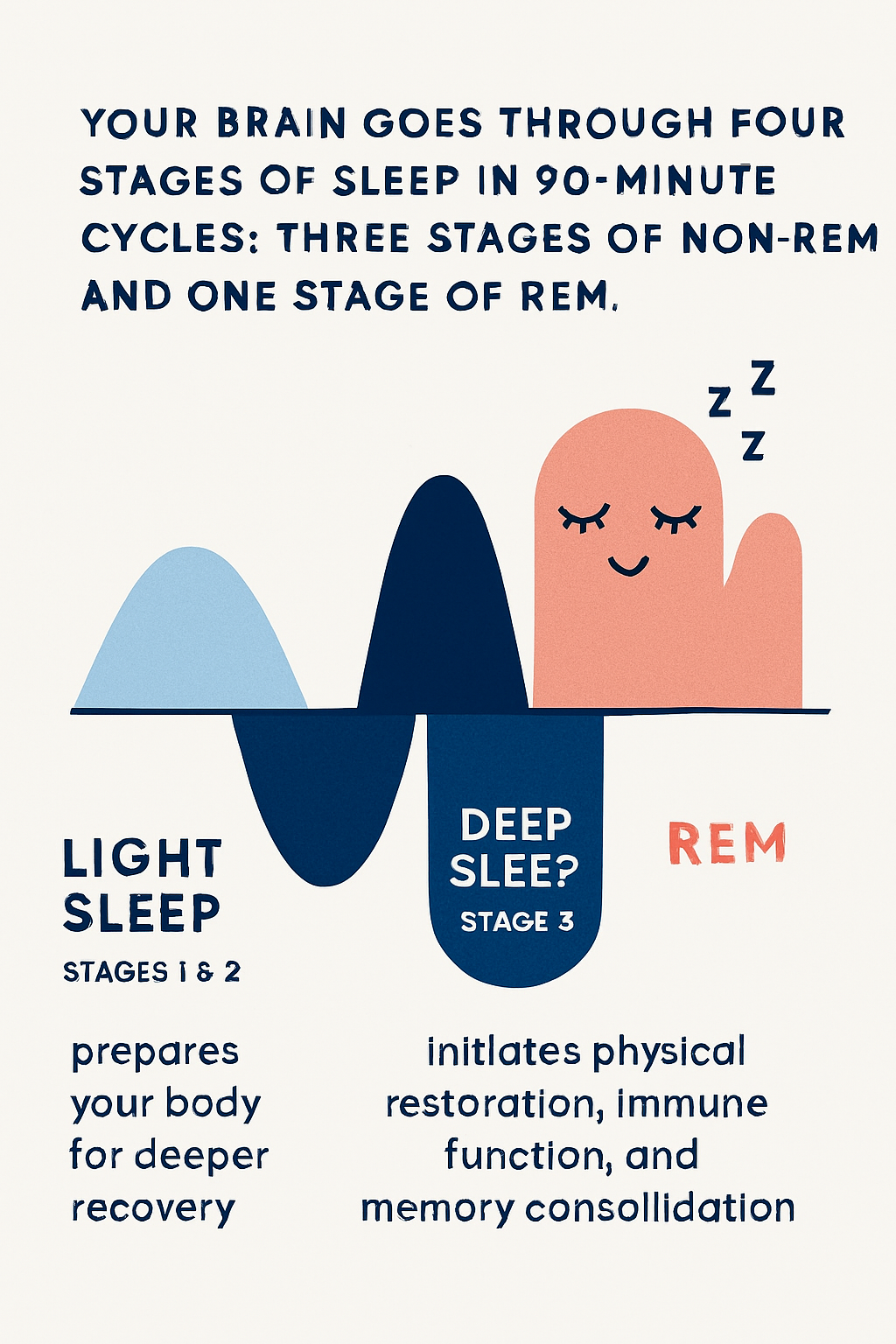
Your brain goes through four stages of sleep in 90-minute cycles: three stages of non-REM and one stage of REM. Light sleep, or stages 1 and 2, prepares your body for deeper recovery, while stage 3 of deep sleep then initiates physical restoration, immune function, and memory consolidation.
REM sleep handles emotional processing and creative problem-solving. Skip any stage consistently, and you will experience the effects within days.
The Temperature Manipulation Hack
To start and continue sleeping well, your core body temperature needs to decrease by 2-3 degrees Fahrenheit. This single biohack can help cut down sleep onset time as much as 40%.
Set your bedroom between 65-68°F. This isn’t about comfort; it’s about triggering thermoregulatory mechanisms that signal sleep readiness to the brain.
Take a hot bath or shower 60-90 minutes before going to bed. The subsequent cooling effect accelerates your natural temperature drop, exploiting your circadian biology.
Consider a mattress cooling pad or smart temperature system. Water-circulating products will maintain the optimal temperature for sleep throughout the night and avoid mid-sleep awakenings due to thermal discomfort.
Light Exposure Protocols That Reset Your Clock
Biohacking sleep starts with the moment you wake up because your circadian rhythm responds most powerfully to specific wavelengths and timing of light exposure.
Get 10-30 minutes of bright outdoor light within one hour of waking. This morning light exposure shifts your circadian phase forward, making it easier to both fall asleep at night and wake up naturally in the morning.
It involves melanopsin-containing retinal ganglion cells that have a direct connection with your suprachiasmatic nucleus-your brain’s master clock.
The Evening Light Strategy
Block blue light 2-3 hours before bed, but don’t stress about red-tinted glasses if that’s a pain. Dim all lights to 10-50 lux – that’s roughly the brightness of candlelight.
Use f.lux or Night Shift on devices, but better yet, eliminate screens altogether during your wind-down time. The psychological stimulation is as important as the photonic input.
This can be achieved by installing blackout curtains or using sleep masks. Even small amounts of ambient light can suppress melatonin production and fragment sleep architecture.
Nutritional Timing and Composition
What you eat—and when—directly impacts how well you sleep through multiple biochemical pathways. Strategic nutrient timing is one of the most underutilized sleep biohacks.
Stop eating 3-4 hours before bed. Eating late at night raises core body temperature and diverts blood flow to digestion, processes that are antagonistic to sleep initiation.
If you must eat closer to bedtime, pick foods with high tryptophan-to-large neutral amino acid ratios. Examples include foods such as turkey, eggs, cheese, and pumpkin seeds.
The Magnesium Protocol
Magnesium deficiency impairs sleep quality directly and affects 50% of Americans. It regulates the GABA receptors, the same neurotransmitter system targeted by sleeping pills.
Supplement with 300-400mg of magnesium glycinate or threonate 1-2 hours before bed. These forms cross the blood-brain barrier more effectively than cheaper magnesium oxide.
Avoid magnesium citrate at night, as it has laxative properties that may interfere with sleep.
Carbohydrate Use as Strategy
Many low-carb dieters report disruptions in sleep, and for good reason: there’s sound science behind this. Carbohydrates increase tryptophan availability to the brain by provoking insulin release.
Include 25-50g of low-glycemic carbohydrates with dinner: sweet potato, quinoa, or rice. This supports serotonin and melatonin production without causing blood sugar spikes.
Supplement Stacking for Sleep Enhancement
Supplements work when they target certain sleep mechanisms in your body that may not be optimized by nature. Supplementing at random wastes money and could further disrupt your sleep.
Essential stack for most people:
- Magnesium Glycinate – 300-400 mg: It supports GABA receptors for nervous system calming.
- L-theonine, 200-400mg: Increases alpha brain waves and lowers cortisol without sedation
- Glycine (3-5g): Lowers core body temperature and improves sleep quality markers
Advanced Additions
Apigenin is a mild anxiolytic due to its affinity for benzodiazepine receptors; 50mg of apigenin is derived from the flower heads of chamomile. It is milder than pharmaceutical drugs but still very effective.
Inositol 500-2000mg: supports neurotransmitter signaling, and may decrease racing thoughts. Useful, especially in anxiety-driven insomnia.
Avoid using melatonin as the first line. Although it is helpful for circadian misalignment (jet lag, shift work), chronic use might downregulate your natural production.
Biofeedback of Heart Rate Variability
HRV measures the variation in time between heartbeats and is a real-time indicator of your autonomic nervous system balance. High HRV correlates with better sleep quality and recovery.
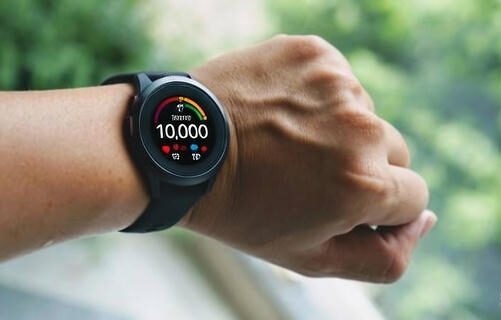
Track HRV through wearables such as Oura Ring or WHOOP, or with chest strap monitors. Morning measurements reveal how well you recovered during sleep.
If HRV is trending downward over several days, then intensify your sleep optimization efforts. Your body is communicating that stress exceeds recovery capacity.
Using HRV for Bedtime Optimization
Practice HRV biofeedback 20-30 minutes before sleep. Breathe at your resonance frequency-usually 5-7 breaths per minute-and watch as your HRV increases in real time.
Applications such as Elite HRV or HeartMath will walk you through this process. The practice activates parasympathetic dominance, preparing your nervous system for sleep.
Optimizing the Sleep Environment
Your bedroom environment influences sleep through multiple sensory pathways. Optimizing these variables compounds your results from other biohacks.
Keep CO2 under 1000ppm by opening a window or through ventilation. Higher levels of CO2 reduce sleep depth and increase the number of awakenings, which you might not even be aware of.
Mask disruptive sounds with white, brown, or pink noise. These frequencies reduce the contrast between background noise and sudden sounds that would otherwise trigger arousal.
Scent as a Sleep Signal
Clinical studies demonstrate that lavender and bergamot essential oils improve sleep quality. The mechanism is similar to some anti-anxiety medications by modulating GABA.
Diffuse these scents in your bedroom 30 minutes before sleeping. Your brain will start associating the smell with sleep, creating a very powerful conditioning effect.
Cognitive Behavioral Techniques
Physical biohacks work best when combined with cognitive intervention. Your thoughts and behaviors around sleep are just as important as your biology.
Practice stimulus control: The bed should be used only for sleep and sex. This classical conditioning makes the bed-sleep association in the brain stronger.
If, after 20 minutes, you are still awake, get out of bed and engage in a mundane activity in dim light until you feel sleepy enough to fall asleep. This avoids the anxiety-arousal cycle that perpetuates insomnia.
The Thought Download Practice
Keep a notepad besides your bed for brain dump. Before sleeping, write down everything that comes to mind during 5-10 minutes: tasks, concerns, random thoughts.
This externalization process sends a signal to your brain that issues are captured and there is no need for active monitoring during sleep. A simple intervention like this can reduce sleep onset time by 15 minutes.
Exercise Timing and Intensity
Timing and intensity determine the impact of exercise on sleep: a nonlinear relationship where more is not always better.
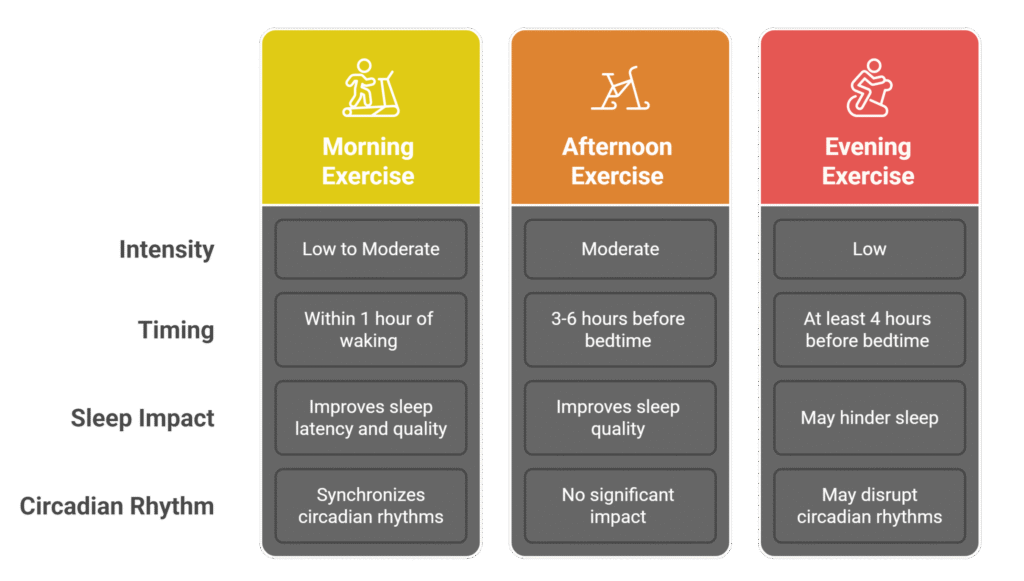
Intense workouts raise core body temperature and cortisol for 4-6 hours afterwards. Finish intense workouts at least 4 hours, preferably 6+, prior to bedtime.
Moderate aerobic exercise enhances sleep quality more reliably than high-intensity training. A 30-minute walk in the afternoon beats a crushing evening CrossFit session for sleep purposes.
The Morning Movement Advantage
Morning exercises synchronize circadian rhythms better than evening sessions. This helps to reinforce the activity-rest cycle your body is expecting.
Even 10 minutes of morning movement—jumping jacks, yoga, walking—results in measurable improvements in sleep latency and quality.
Tracking and Measurement
You can’t optimize what you’re not measuring. Sleep tracking provides objective data that often runs counter to subjective impressions.
Use both wearable sleep trackers and subjective sleep logs. Wearable devices including Oura Ring, WHOOP, or Apple Watch can track sleep stages, duration, and efficiency.
Track these key metrics:
- Sleep latency: Time to fall asleep (goal: less than 20 minutes)
- Sleep efficiency: Time asleep divided by time in bed (target: above 85%)
- Wake after sleep onset: Time that is spent awake after initially falling asleep. Aim for under 30 minutes
The Framework for Data Interpretation
Don’t obsess over single nights; seek weekly trends and patterns. One lousy night in bed means nothing; a downward trend does.
Correlate sleep data with daytime variables: stress levels, exercise, caffeine intake, alcohol consumption, and screen time. These associations reveal your personal sleep disruptors.
Circadian Rhythm Alignment
Your circadian rhythm controls sleep-wake cycles via secretion of hormones, body temperature, and gene expression. Struggling against this rhythm means poor sleep automatically-regardless of the optimization of other features.
Maintain a constant sleep and wake schedule within 30 minutes or so, even on weekends. This helps reinforce circadian amplitude and makes it easier to fall asleep and wake up naturally.
Be exposed to the full spectrum of natural light changes throughout the day: the bright morning light, natural afternoon light, dim evening light, and complete darkness at night.
Shift Workers and Travelers
If your schedule forces circadian misalignment, strategic light exposure and melatonin can help. Take 0.3-0.5mg of melatonin at your desired bedtime in the new time zone.
Use bright light therapy (10,000 lux) for 30 minutes at the time you want to feel alert. It phase-shifts your circadian clock over several days.
Alcohol and Caffeine Control
Timing determines the impact of both substances on sleep architecture and the severity of such impact. Understanding half-lives and metabolic pathways allows for strategic use.
Caffeine has a half-life of 5-6 hours. That afternoon coffee at 3 PM still has 25 percent of its caffeine circulating at 9 PM, suppressing adenosine and fragmenting sleep.
This means you need to stop caffeine intake at least 8-10 hours before bedtime. For a 10 PM target bedtime, this means your cutoff should be noon or 2 PM maximum.
The Alcohol Paradox
Alcohol hastens the induction of sleep but devastates sleep quality: it suppresses REM sleep, increases sleep fragmentation, and causes early morning awakenings as blood alcohol declines.
If you drink, stop at least 3-4 hours before bed. Give your body time to process the alcohol before going to bed. The general rule is that one unit of alcohol takes one hour to clear.
Cold Exposure and Thermogenesis
Cold stimulates brown adipose tissue and modulates circadian rhythm via temperature-sensing neurons. Strategic cold can enhance sleep if implemented correctly.
Cold showers or ice baths work best in the morning or afternoon, not evening. Morning cold exposure increases alertness and strengthens the wake phase of your circadian rhythm.
However, ending an evening shower with 30-60 seconds of cool, not cold, water can hasten the post-shower drop in temperature that induces sleep.
Breathing and Nervous System Regulation
Your breathing pattern directly influences the balance of the autonomic nervous system. Conscious breathing acts like a bridge between intentional behavior and unconscious sleep preparation.
Practice 4-7-8 breathing before bed: inhale for 4 counts, hold for 7 counts, and exhalation for 8 counts; repeat 4-8 cycles. This pattern triggers parasympathetic dominance more quickly compared to meditation alone.
Nasal breathing during sleep prevents mouth breathing, which causes sleep disruption through a variety of mechanisms including oxygen desaturation and sympathetic tone increase.
Taping the Mouth
If you are a nighttime mouth breather, medical tape designed for the task is worth a try. It sounds extreme, but switching to nasal breathing during sleep decreases apnea events and improves oxygenation for many.
Begin with a small strip vertically across the lips. If one has nasal blockages, those should first be attended to with a doctor.
Technology and Blue Light Reality
It simplifies what is a nuanced relationship: yes, blue light suppresses melatonin, but more often the psychological stimulation from devices matters.
Reduce screen brightness to minimum usable levels after sunset. Enable dark modes on all applications. These simple changes reduce light exposure without requiring red glasses.
The best screen policy: none for 60-90 minutes before bed. Use that time for reading, conversation, light stretching, or intimacy—activities that naturally wind down your nervous system.
Advanced: Chronotype Optimization
Your genetic chronotype determines your natural sleep-wake preferences. Working against your chronotype creates permanent circadian stress.
The morning larks naturally wake up early and feel great in the morning hours. Night owls peak in the evening and struggle with early schedules. Most people fall somewhere in between.
If possible, align your schedule with your chronotype. Night owls forced into 6 AM wake times will never achieve optimal sleep quality, regardless of other interventions.
Where alignment is not possible, use strategic light and melatonin timing to shift your phase gradually. But recognize you are working against biology.
The Reality of Sleep Debt
Sleep debt mounts and cannot be completely repaid with weekend catch-up sleep. Every hour of sleep debt requires several days of recovery to return to baseline performance.
Prioritize consistency over heroic sleep sessions. Seven hours of nightly sleep beats five hours on weekdays and 10 hours on weekends.
Track your sleep debt and adjust accordingly. If you’ve accumulated big debt-a number of nights under 7 hours-allow yourself extended sleep opportunities ( slept in ) until you wake up naturally with no alarm.
Building Your Personal Sleep Protocol
Generic advice fails because individual variation is enormous. Your optimal sleep protocol emerges from systematic experimentation in developers.
Start with the basics: temperature, darkness, consistent timing, and morning light. These universal factors benefit almost everyone.
Add interventions one at a time with 5-7 day testing windows. Track both objective data and subjective quality before adding the next variable.
What works for your friend might disrupt your sleep. That’s because Instagram influencers and biohacking gurus often promote protocols optimized for their unique biology, not yours.
Taking Action on Sleep Quality
Biohacking sleep changes rest from passive downtime to actively optimized recovery. The compound effects of better sleep extend into every area of your life: cognitive performance, emotional regulation, physical recovery, and longevity.
Start tonight with three high-impact changes: set your bedroom to 67°F, get morning sunlight tomorrow, and stop caffeine by 2 PM. These foundational changes cost nothing and deliver results within days.
Ready to optimize not just your sleep but your entire brand’s presence? Press N’ Release Agency helps health and wellness professionals communicate their expertise through strategic content and press release distribution.
Whether you build authority in the biohacking space or establish your health optimization practice, our comprehensive packages amplify your message to the audiences that matter. Let’s discuss how professional content strategy can position you as the go-to expert in sleep optimization and performance enhancement.