Going green doesn’t mean emptying your wallet—it means filling it back up while helping the planet. The best eco-friendly habits reduce your environmental footprint and your monthly expenses simultaneously, creating a win-win that makes sustainability accessible to everyone.
Why Green Habits Are Wallet Game-Changers
Sustainable living has been unfairly branded as expensive, but that’s outdated thinking.
Want polished, research-backed blog content that keeps readers hooked? ➜ Tap here to hire professional writers and get started today.
The reality is that most eco-friendly habits eliminate waste—and waste is just money leaving your pocket unnecessarily. When you reduce consumption, reuse what you have, and optimize your resources, you’re practicing both environmental stewardship and smart financial management.
For a deeper dive, check out our guide to renewable energy options for homeowners.
Smarter Energy Consumption Saves Hundreds Annually
Your energy bill is bleeding money every month, most of it completely preventable.
Switch to LED lighting throughout your home.
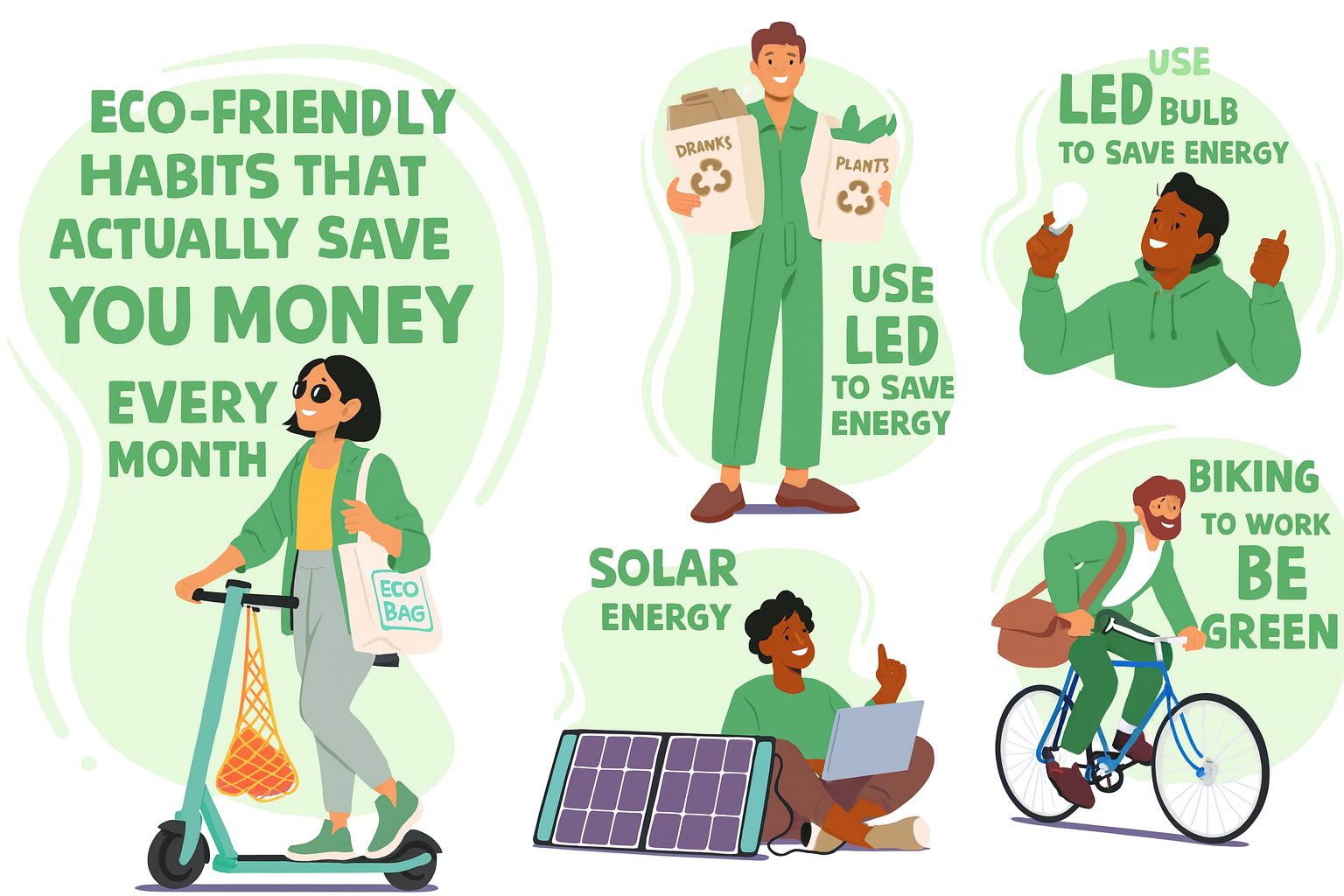
LED bulbs use 75% less energy than traditional incandescent bulbs and last 25 times longer. A single LED bulb costs around $5 but saves approximately $80 in electricity costs over its lifetime.
If you replace just 20 bulbs in your home, you’re looking at $1,600 in savings over the next decade—and that’s conservative.
Unplug Energy Vampires
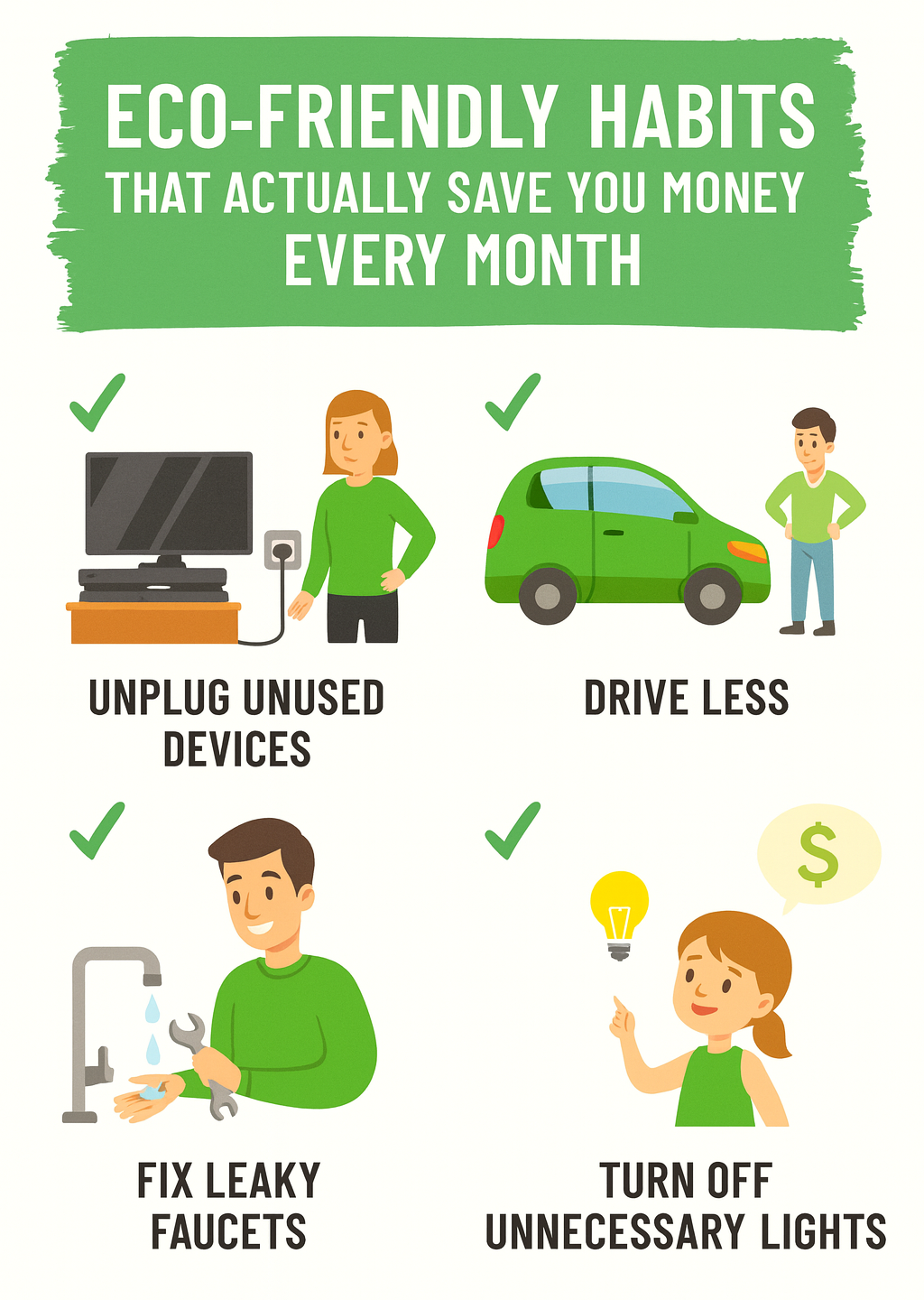
Devices on standby mode still draw power, costing the average household $100-$200 annually. Your phone chargers, coffee makers, gaming consoles, and cable boxes are silently draining your bank account.
Use power strips to cut power completely when devices aren’t in use, or invest in smart power strips that automatically shut off power to idle devices.
Change Your Thermostat with a Strategy
For every degree you change your thermostat, you save about 3% on your heating and cooling costs.
Setting your thermostat back 7-10 degrees for 8 hours daily can save around $180 per year on heating and cooling. Program your thermostat to adjust automatically when you’re sleeping or away from home.
Water Conservation Cuts Bills and Waste
Water seems inexpensive, but when heating costs and sewage fees are considered with the rates of inefficiency, that quickly adds up.
Install Low-Flow Fixtures
Low-flow showerheads and faucet aerators cost $10-$40 but reduce water usage by 30-50% without sacrificing pressure. The average family saves approximately $145 annually on water and $315 on energy used to heat that water.
That means $460 back into your pocket every year from a one-time investment.
Fix Leaks Immediately
A faucet that drips once per second wastes 3,000 gallons annually-that’s 180 showers down the drain. A single leaking toilet can waste up to 200 gallons per day, adding $70-$100 onto your monthly water bill.
Most leaks require simple inexpensive fixes that pay for themselves within weeks.
Greywater Collection and Reuse
Put a bucket in your shower to collect water as it warms up; use that to water plants or flush toilets. This single, simple, easy, efficient, eco-friendly habit saves 2-5 gallons per shower-with absolutely no lifestyle change.
Transportation Choices That Boost Your Bottom Line
Your commute and travel habits represent one of your largest monthly expenses-and your biggest savings opportunity.
Car-Free Days
AAA says the average cost of driving and maintaining a vehicle is $12,182 every year. Every day you aren’t driving saves around $33 through a combination of savings on fuel, depreciation, insurance, and maintenance.
Commit to one car-free day per week and save $1,716 annually.
Optimize driving practices
Aggressive driving lowers fuel economy by 15-30% on highways and 10-40% in stop-and-go traffic. Just driving smoothly, maintaining steady speeds, and avoiding rapid acceleration saves the average driver $300-$500 per year in fuel costs.
Remove extra weight from your vehicle—each 100 pounds taken off improves fuel economy by 1%
Carpool or use ride-sharing judiciously.
By splitting commute costs with just one other person, the transportation costs get slashed in half. Three regular carpool partners reduce your driving days by 66%, saving thousands annually on fuel, maintenance, and vehicle depreciation.
Apply this same cost-conscious approach to sustainable travel destinations that don’t break the bank.
Food Choices That Nourish Your Wallet
Food waste and inefficient shopping have drained $1,500-$2,000 from the average household yearly.
Meal Plan Prior to Shopping
Households with meal plans waste 50% less food and spend 30% less on groceries. That translates into $2,400 annual savings for a family spending $8,000 yearly on food.
Create a weekly menu, inventory your pantry first, and shop with a list to avoid impulse buys and foraged vegetables rotting in your crisper.
Buy seasonal and local fruits and vegetables
Seasonal produce-30-50% less expensive than its out-of-season counterpart-will last longer, too, because it hasn’t been shipped thousands of miles. Shopping at farmers markets or joining a CSA, or Community Supported Agriculture, means healthy, cheap produce while supporting local economies.
You’ll save money while eating better quality food. Learn more about plant-based nutrition for peak performance and its health benefits.
Strategic Reduction of Meat Consumption
Meat is generally the most costly ingredient of any meal. Even cutting meat consumption by 50% saves the average household $750-$1,200 annually while drastically reducing your environmental footprint.
Try “Meatless Mondays” or embrace meat as a side dish rather than the main event.
Instead of Tossing Food, Freezer It
Freeze overripe bananas for smoothies and baking
- Vegetable Scraps into stock
- Choose vegetables that are near the end of their freshness.
- Herbs can be frozen in oil or made into pesto.
These eco-friendly habits turn would-be waste into worth-more ingredients.
Smart Shopping Practices That Protect Your Money
Consumer habits are huge opportunities in terms of savings and sustainability.
Quality Over Quantity
Fast fashion and cheap products feel economical at first but create expensive replacement cycles. A $100 pair of quality shoes lasting 5 years costs $20 annually, while the $30 shoes that are replaced each year cost you-you guessed it-$30 annually.
Quality items reduce waste, save money over time, and eliminate the frustration of constant replacements.
Embrace Second-Hand Shopping
These are thrift stores, consignment shops, and online marketplaces, which offer second-hand items at 50-90% discounts. Furnishing an apartment with second-hand furniture saves thousands versus buying new.
Second-hand shopping for clothes alone saves the average person $800-1,500 annually while diverting perfectly good items from landfills.
Borrow, Rent, or Share Infrequently Used Items
Why own a pressure washer you use twice yearly? Tool libraries, equipment rental services, and neighborhood sharing apps provide access without the costs, storage needs, and maintenance costs of ownership.
This saves storage space and thousands in purchases you don’t actually need.
Savings in Household Products and Personal Care
Commercial cleaning and personal care products are marked up dramatically and often contain harmful chemicals you don’t need.
Making Your Own Cleaning Products
Vinegar, baking soda, castile soap, and essential oils create effective, non-toxic cleaners for pennies per batch. The average household spends $600-$700 annually on cleaning products but can reduce this to $50-$100 with DIY alternatives.
That’s $500-$650 in annual savings while eliminating toxic chemicals from your home.
Switch to Reusable Alternatives
Single-use products are much more expensive in the long run:
- Cloth napkins, over paper napkins, save $150 – 200 yearly
- Reusable water bottles save $400-$600 annually over bottled water
- Menstrual cups save $50-$120 annually over disposable products
These switches need little initial investment and pay off for many years.
Buy in Bulk Strategically
Bulk purchasing reduces packaging waste and per-unit costs by 20-50% for non-perishable items. Focus on staples you definitely use—rice, beans, pasta, oats, nuts, and spices—and avoid bulk perishables that might spoil.
A well-stocked bulk pantry saves an average household about **$600-$900 yearly.
Home Improvements That Pay Dividends
Strategic home improvements deliver immediate and ongoing savings while increasing property value.
Improve Insulation and Seal Air Leaks
Poor insulation and air leaks force your HVAC system to work harder, wasting 25-40% of heating and cooling energy. Sealing leaks with caulk and weatherstripping costs $50-$200 and saves $200-$400 annually on energy bills.
Adding attic insulation costs more upfront but delivers 15-20% energy savings year after year.
Install a Programmable or Smart Thermostat
These devices cost $100-$250 but reduce heating and cooling costs by 10-23%, saving $180-$280 annually. They pay for themselves within one year and continue delivering savings for a decade or more.
Smart thermostats learn your preferences and optimize automatically. Explore more smart home technology that pays for itself to further automate your savings.
Upgrade to Energy Efficiency Appliances
Energy Star appliances use 10-50% less energy than standard models. While upfront costs are higher, lifetime savings are substantial:
- Energy Star refrigerators save $300 over their lifetime.
- Energy Star washing machines save $370 over their lifetime.
- Energy Star dishwashers: Savings over their lifetime is $400.
Replace appliances only as they fail, not preemptively. These home upgrades increase property value while reducing monthly expenses.
Banking and Financial Habits Worth Adopting
Your financial practices can be aligned with sustainability while saving money.
Choose Paperless Banking and Billing
Many companies offer small discounts—typically $1-$5 monthly—for paperless billing. Across multiple accounts and services, this adds up to $60-$100 annually while reducing paper waste.
Set up automatic payments to avoid late fees that cost far more.
Support Green Financial Institutions
Some banks and credit unions invest in renewable energy and sustainable businesses while offering competitive rates and fewer fees. Research your options and consider institutions that align with your values.
Lower fees translate directly to more money in your account.
Invest in Sustainable Funds
ESG (Environmental, Social, and Governance) funds increasingly outperform traditional investments while directing capital toward sustainable businesses. Your investment choices shape the business landscape while growing your wealth.
The Compound Effect of Small Changes
Individual eco-friendly habits create modest savings, but combining them generates substantial financial impact.
Implementing just these five changes saves approximately $3,200 annually:
- LED lighting conversion: $160
- Thermostat adjustment: $180
- Low-flow fixtures: $460
- Reduced meat consumption: $900
- Meal planning: $2,400 (net of other food savings)
That’s an extra $266 monthly that could fund retirement savings, debt repayment, or that vacation you’ve been postponing. Discover more smart budgeting strategies that actually work to maximize these savings.
Overcoming the Initial Investment Barrier
Some eco-friendly habits require upfront costs that pay back over time.
Prioritize changes with the fastest payback periods first—LED bulbs, low-flow fixtures, and behavioral changes require minimal investment. Use the savings from these quick wins to fund larger improvements like insulation or appliance upgrades.
Many utility companies offer rebates and incentives for energy-efficient upgrades, dramatically reducing initial costs.
Tracking Your Savings Reinforces Habits
Document your baseline spending before implementing changes, then track monthly expenses in affected categories. Watching savings accumulate provides powerful motivation to maintain new habits and explore additional opportunities.
Many people discover they save far more than expected once they commit to sustainable living.
Making Sustainability Your New Normal
Eco-friendly habits become effortless once established as routines.
Start with 2-3 changes that align with your lifestyle and values. Once these become automatic, add more. This gradual approach prevents overwhelm and ensures lasting change rather than temporary enthusiasm.
This same principle applies to business operations—learn more about how sustainable business practices drive profitability.
The goal isn’t perfection—it’s progress that benefits both your finances and the planet. See how celebrities are leading the sustainable living movement and making green choices mainstream.
Start Your Green Savings Journey Today
You now have a comprehensive roadmap to reduce expenses while living more sustainably. These eco-friendly habits aren’t sacrifices—they’re smart financial decisions that happen to benefit the environment.
The question isn’t whether you can afford to live sustainably—it’s whether you can afford not to.
Ready to share your green living journey with a wider audience?
Press N’ Release Agency specializes in crafting compelling content that positions you as a thought leader in sustainability, business innovation, and lifestyle transformation. Our strategic content packages amplify your message, build your authority, and connect you with audiences who share your values.
Explore how our tailored press release and content services can elevate your brand while promoting the sustainable practices that matter most.
Let’s tell your story in a way that inspires action and drives real results.