

Managing irregular income does not have to be chaotic. Freelancers face very unique financial challenges, such as fluctuating incomes, variable expenses, and complex tax considerations. The right freelancer budgeting tools transform financial stress into financial clarity.
Why Traditional Budgeting Fails Freelancers
Fixed budgets assume predictable paychecks.
Want polished, research-backed blog content that keeps readers hooked? ➜ Tap here to hire professional writers and get started today.
That’s a luxury most self-employed professionals don’t have. With irregular income, a traditional fixed budget won’t cut it. You need systems that will help them budget for the feast-or-famine cycles that define their freelance lives.
The solution isn’t working harder, but rather with the tools built for your reality.
Understanding What Makes Freelancer Budgeting Tools Different
Budgeting apps for freelancers are those that target the specific financial needs that freelancers present. Unlike personal finance applications for salaried employees, they manage multiple streams of income, project-based earning, and even business expense tracking.
What to look for in effective freelancer budgeting tools:
Income tracking across multiple clients and payment platforms
- Separation of business and personal expenses
Tax estimation and tracking of deduction - Variable expense management
- Cash flow forecasting capability
The best tools don’t just track numbers; they give you actionable insights that enable you to make smarter financial decisions.
Top Features That Matter for Self-Employed Professionals
Income Consolidation from Multiple Sources
MoneyPatrol will let freelancers track their income with ease, by hooking all of these different sources into the app, whether online platforms, direct deposits, or invoices. Thus, you get an overview of cash flows without keying data from five different platforms.
Your income isn’t simple, and neither should be your tracking.
Automated Tax Preparation
Tax season need not be a source of panic attacks. Modern budgeting apps help in organizing the financial data and tracking the relevant expenses throughout the year by categorizing them as tax-deductible.
Setting aside money throughout the year is a major way to prevent those April surprises. Apps let freelancers automatically allocate certain percentages of their income into various categories, like setting aside money for taxes and business expenses.
Expense Categorization That Actually Works
Freelancers need to allocate each expense to the right resources, distinguishing between fixed costs like software subscriptions and variable costs such as new equipment. Smart categorization reveals which expenses drive revenue, and which are draining resources.
Understanding expense patterns helps you price projects more accurately and spot profit leaks.
Essential Freelancer Budgeting Tools to Consider
QuickBooks: All in One End
QuickBooks has everything one would need to make prudent budgeting a practice and control accounting responsibilities linked with business ownership. The platform balances affordability with functionality, providing an intuitive dashboard for high-level financial overviews.
Of particular value to freelancers, it puts together three very important functions: invoicing, expense tracking, and preparation for taxes.
Expensify: Built for Variable Income
Expensify approaches this from a different angle: It brings both personal and business expenses under one platform, specifically built for independent workers. That means no more juggling multiple systems or wasting time moving information between them.
For freelancers tired of maintaining separate personal and business budgets, this integration saves hours every month.
YNAB – You Need A Budget: The Zero-Based Approach
YNAB operates on a system in which users allocate every dollar that they make for something, giving each dollar a specific job. This kind of methodology really works well with freelancers who have to prioritize irregular income across competing demands.
When every dollar has a purpose, you stop wondering where your money went.
Implementing a Flexible Budgeting Strategy
Calculate Your Baseline
Calculate your average monthly income by adding up what you earn during a year, then dividing that number by 12. This baseline helps you plan even if actual income is significantly different in some months.
Track at least six months of income data in order to find the seasonal patterns of your business.
Fixed and Variable Expenses Separated
Under the flexible budgeting approach, indicate fixed and variable expenses in separate line items. Fixed expenses include software subscriptions, insurance, hosting fees, and much more; these must be paid. Variable expenses change according to monthly earnings.
This prioritization makes sure important business operations get performed during lean months.
Build Your Buffer
Emergency funds aren’t optional for freelancers; they’re essential infrastructure. Apps that help freelancers set aside money for business expenses, taxes, and personal savings enable automated allocation.
Aim for three to six months of fixed expenses in your buffer before investing in growth initiatives. For more ways to build your financial resilience, check out our money tips section on strategies to build an emergency fund tailored specifically to irregular income streams.
Choosing the Right Tool for Your Business
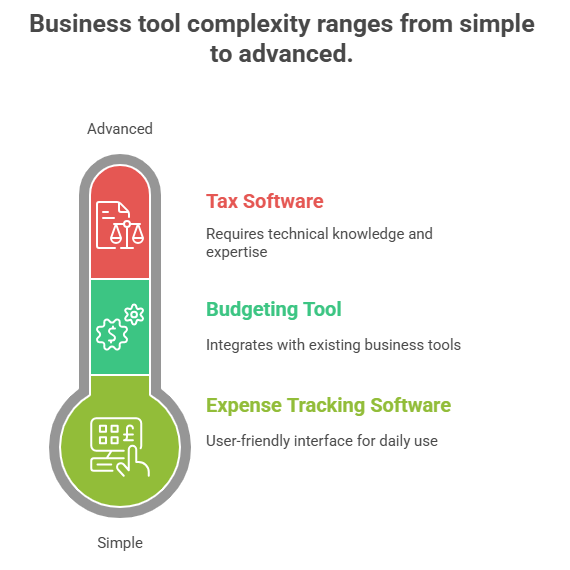
Consider Your Technical Comfort Level
Contractors need expense tracking software with an easy-to-use interface that simplifies their workflow without being too complicated to learn. The best tool is the one you will actually use on a continual basis.
Complex features mean nothing if you abandon the platform after two weeks.
Integration Capabilities Evaluation
The integration with other business tools, such as invoicing and tax software, is a big factor that influences the choice of software. Your budgeting tool should integrate with your current workflow, not add more administrative burdens.
Seek out platforms that integrate with your bank, payment processors, and accounting software.
Compare Pricing Models
Some tools require a one-time fee, whereas others introduce a subscription cost that will quickly add up over time. Consider the total cost of ownership, including hidden fees for premium features or additional users.
Free trials allow you to test functionality before investing financially.
Advanced Methods to Optimize Financial Performance
Track Project Profitability
By tracking earnings and expenses on a per-project basis, you see which projects make the most money, and you will be able to prioritize projects accordingly. This insight changes how you approach potential clients and the pricing you set for your services.
Your time is your inventory-invest it where returns are highest.
Reporting to Drive Strategy
Budgeting apps come with reporting and analytics capabilities that allow the creation of extensive summaries of financial performance, such as income and expense summaries, profit and loss statements, and cash flow reports.
Monthly reviews show you trends that you can’t see in daily transactions. Go deeper into data-driven business decision-making by checking our business trends analysis on leveraging financial metrics for strategic growth.
Forecast Cash Flow Proactively
It provides the means for tracking expenses, estimating taxes, and other forms of categorization that help streamline financial management. Forecasting prevents surprises and enables proactive decision-making.
When you see a lean month coming, you may be able to adjust spending or pursue more projects before cash flow becomes critical.
Common Budgeting Mistakes to Avoid
Mixing Personal and Business Finances
This creates tax nightmares and obscures business profitability. Make sure to keep separate accounts and utilize tools that maintain clear boundaries between personal and business expenses.
Your future accountant will thank you.
Neglecting Insurance Costs
Freelancers are responsible for insurance, including health, disability, and professional liability. These costs vary, but this is all important to remember when setting up your budget.
Adequate insurance guards your business against devastating financial blows. For comprehensive coverage strategies, visit our health and fitness section, in which we dive into insurance options that protect both your physical wellbeing and financial stability.
Forgetting to Track Small Expenses
Those coffee meetings, parking fees, and small software subscriptions add up. Diligent day-to-day tracking catches all eligible business expenses so that you pay only what you owe in taxes.
Those $5 transactions add up to hundreds of dollars in lost deductions.
Leveraging Technology for Competitive Advantage
Mobile-First Solutions
Budgeting tools are moving toward mobile-first solutions, reflecting freelancers’ need for flexibility and access on the go. Track expenses immediately after they occur rather than reconstructing your month from crumpled receipts.
Real-time tracking enhances accuracy and minimizes administrative burden.
AI-Powered Insights
AI-driven predictive analytics enhances the accuracy of financial forecasting by allowing for real-time anomaly detection. Such tools recognize spending patterns and alert you to unusual transactions or budget variances.
Technology should work for you, surfacing insights you might otherwise miss. Stay current with emerging financial technologies through our tech trends coverage on AI applications transforming small business finance.
Cloud-Based Collaboration
Cloud-based platforms enable seamless remote collaboration and updates, while saving on IT costs. If you work with an accountant or bookkeeper, cloud platforms allow for real-time access, without requiring a file transfer.
Collaboration should not involve scheduling conflicts or email chains.
Building Sustainable Financial Habits
Review Weekly, Not Monthly
Consistent use brings about better awareness and progress on spending through regular review. Catch issues before they become crises, and financial goals stay top of mind with a weekly check-in.
Fifteen minutes a week beats a stressful quarterly scramble.
Set Specific Financial Goals
MoneyPatrol puts freelancers in a position to set financial goals and plan for the future, whether saving for major purchases, retirement, or building emergency funds. Vague intentions produce vague results—specific targets drive action.
Define exactly what financial success looks like for your business this quarter.
Smarter Automation Where Possible
When you are busy, manual processes fail. Automated allocation allows freelancers to stay disciplined in managing their finances and prepares them for tax obligations.

Remove decision fatigue by automating routine financial tasks. For broader automation strategies that save time and reduce errors, explore our home improvement and real estate section covering smart home technologies paralleling business automation principles.
Long-Term Stability Planning
Retirement Considerations
Plan for taxes: The self-employed have to plan for taxes and explore retirement options. Unlike traditional employees, you’re responsible for your own retirement funding—and for maximizing available tax advantages.
Both SEP-IRAs and Solo 401(k)s provide substantial tax benefits while building wealth.
Scaling Your Financial Infrastructure
Also, consider whether the software scales with your business. A solution that grows with you may save money compared to frequently switching tools. The budgeting needs of a $30,000 annual income are decidedly different from your needs at $150,000.
Choose tools that support growth without the need for complete system overhauls.
Market Trends and Adaptation
The market for budgeting software, designed for freelancers, is forecasted to grow from $1.55 billion in 2024 to $1.66 billion in 2025, reflecting rising demand and continuous innovation.
Keeping up with available tools means not having to use antiquated systems that constrain your capability. Keep track of the evolving market dynamics in our business trends section: analysis of how emerging technologies reshape freelance economy infrastructure.
Industry-Specific Considerations
Creative Professionals
Designers, writers, and artists are often plagued by project-based income with large gaps between payments. Tools that offer advanced invoicing features combined with payment tracking become highly important.
Track which customers pay promptly and which need follow-ups.
Consultants and Coaches
Retainer-based income creates different budgeting dynamics than project work. Look for tools that handle recurring revenue alongside one-time projects.
Predictable income allows for more aggressive savings and investment strategies.
Freelancers – Technical
Developers and IT personnel most often oversee higher transaction volumes across diversified platforms. Strong integration capabilities and automated categorization top the agenda.
Keep data entry to a minimum and devote your time to chargeable work. For deeper insights into optimizing technical workflows beyond finance, check our tech trends section covering productivity tools designed especially for technical professionals.
Integration with Environment and Lifestyle
Sustainable Financial Practices
Data security and compliance with regulations such as GDPR are major concerns, especially for companies dealing with sensitive freelance payment data. Only opt for those providers that take security and transparency on top of their agendas.
Financial responsibility extends to protecting client data and maintaining ethical business practices. Learn more about sustainable business approaches in our green tech and living section, as we explore how environmentally conscious practices align with financial health.
Work-Life Balance Through Financial Clarity
Financial stress bleeds into every corner of existence. Solid budgeting tools-those that manage to make sense, at any rate-reduce anxiety caused by a given financial situation.
When you know exactly where you stand financially, you can make confident decisions about taking time off or pursuing passion projects.
Taking It to the Next Level
The right freelancer budgeting tools turn financial management from a chore into a strategic competitive edge. Whether it’s an all-encompassing platform like QuickBooks or a niche solution like Expensify, it’s all about sticking with what you’ve got.
Now, start by calculating your baseline income and separating fixed and variable expenses, then choose one tool to implement this week. Don’t try to perfect your entire financial system overnight; progress beats perfection.
Ready to amplify your freelance success beyond just budgeting?
Professional content marketing drives business growth by establishing your expertise and attracting ideal clients. Press N’ Release Agency specializes in creating compelling blog posts and press releases that position self-employed professionals as industry authorities. When your financial foundation is solid, strategic content marketing accelerates your path to premium clients and sustainable income.
Learn how professional writing services can complement your financial discipline and build the business visibility that you deserve at Press N’ Release Agency.