
The 2026 Revolution Transforming Urban Life
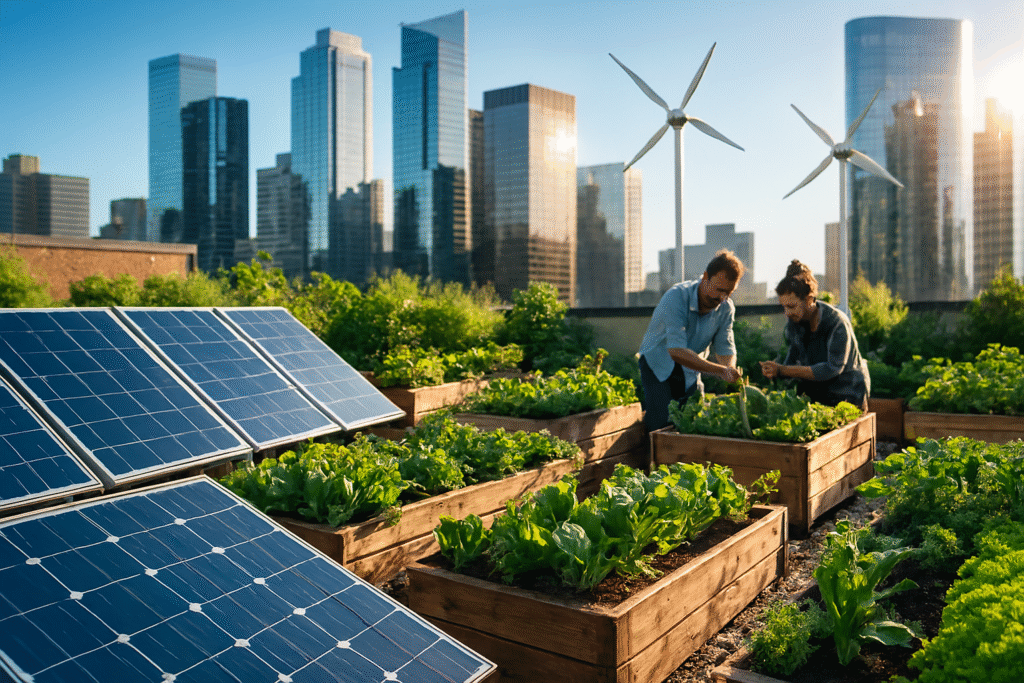
Urban pollution is not just an environmental but also a business opportunity; innovations by green tech startups 2026 make our cities breathable, livable, and sustainable. From air-purifying infrastructure to waste-eliminating technologies, companies are proving that profitability and planetary health can coexist.
Innovation Catalyzing Due to an Urban Pollution Crisis
Cities produce 70% of the world’s carbon emissions and house 55% of the world’s population.
Want polished, research-backed blog content that keeps readers hooked? ➜ Tap here to hire professional writers and get started today.
All that imbalance has built a massive market for solutions. Green tech startups aren’t waiting on governments to act; they’re deploying technology now, from Seoul to San Francisco, turning pollution into profit and transforming how cities operate.
Air Quality Tech: Breathing New Life Into Cities
The most visible impact comes from startups that directly take on air pollution.
Carbon capture installations are sprouting on building facades, filtering CO2 while generating revenue through carbon credits. One London-based startup has fitted bus stops with modular air filtration systems that remove particulate matter while showing real-time air quality data to commuters.
Smart Sensors Creating Pollution Maps
Hyper-local air quality monitoring networks are the game-changers in urban planning.
These IoT-enabled sensors create detailed pollution maps to help cities identify hotspots and redirect traffic. A network of sensors deployed by a Barcelona startup has contributed to the city’s reduction in nitrogen dioxide levels by 23% in targeted neighborhoods through data-driven interventions.
Today, residents can check air quality on their phones before they plan outdoor activities—a process which seemed highly futuristic just five years ago.
Waste Tech: Turning Trash into Treasure
Green tech startups in 2026 will revolutionize waste management with various solutions that eliminate the very concept of garbage altogether.
Large recycling facilities using AI-powered sorting systems have achieved 95% accuracy, greatly reducing contamination. These systems employ computer vision to identify and separate materials at speeds that no human workforce could accomplish.
One company based in Amsterdam has deployed smart bins throughout the city that compact waste automatically and notify collection services only when full. The result? 60 percent fewer collection trips and significantly lower emissions from garbage trucks.
The Circular Economy in Action
Startups are closing the loop on materials that conventionally ended up in landfills.
- Plastic-to-fuel converters installed in neighborhoods transform household plastic waste into usable energy
- Food waste digesters at restaurants and apartment complexes create compost and biogas within 24 hours
- Construction waste processors: process demolition debris into building materials at the site
These are no longer pilot projects; these are revenue-generating, scaled operations that divert millions of tons from landfills.
Transportation Tech: Electrifying Urban Mobility
The transport sector makes up nearly a quarter of emissions from cities; thus, this is prime territory for disruption.
EV infrastructure startups are no longer sticking to their simple charging stations. Dynamic charging roads, which can power the vehicles while driving, are under trial in three European cities, possibly ditching the range anxiety entirely.
Micromobility Gets Serious
E-scooters and e-bikes were just the beginning.
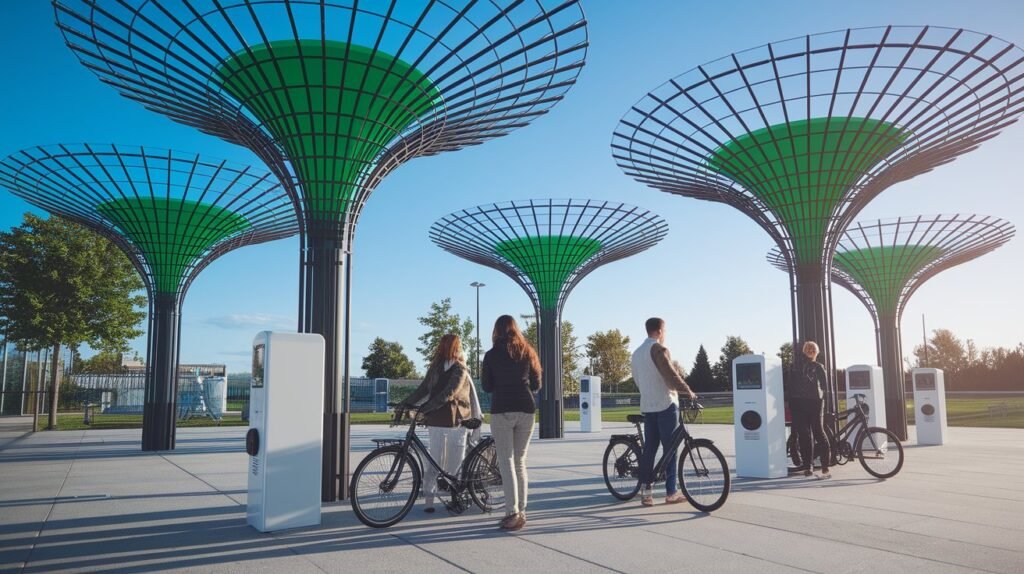
Green tech startups 2026 are deploying solar-powered charging stations, battery-swapping networks, and AI routing systems that optimize micromobility fleets to reduce vehicle congestion. The platform of one Singapore startup has replaced an estimated 2 million car trips in its first year of operation.
It’s not just about the emissions: cities are taking back parking spaces for green space, fundamentally redesigning urban layouts around human-scaled transportation.
Building Tech: Making Structures Carbon Negative
The built environment accounts for 40% of total energy use worldwide, and start-ups are attacking it from multiple angles.
With AI, smart building management systems today optimize heating, cooling, and lighting in real time, thus reducing energy consumption by as high as 40%. The system learns occupancy patterns and adjusts automatically, thereby eliminating the waste from vacant rooms consuming power.
Green Retrofitting at Scale
Historic buildings are getting 21st-century upgrades without losing their character.
Start-ups have designed window films to control heat transfer, paint coatings to cool buildings, and insulation from recycled material which outperforms the traditional choices. One Toronto company alone has retrofitted more than 500 buildings with its modular solar panel system that requires no roof penetrations-preserving architecture while generating clean energy.
Water Tech: Every Drop Counts
Urban water systems leak, waste, and contaminate-problems which green technology startups are tackling with precision.
Atmospheric water generators provide clean drinking water, literally pulling moisture from the air in water-stressed cities. Today, such systems power full buildings in Dubai and Los Angeles, reducing dependence on strained municipal supplies.
In urban parks, smart irrigation systems use soil sensors and weather predictions to apply just the amount of water needed, reducing consumption by up to 50% while maintaining healthy green spaces.
Greywater Revolution
Treating and reusing water on-site has become standard in new developments.
Systems that capture shower and sink water for toilet flushing and irrigation are being retrofitted into existing apartment complexes. One Berlin startup’s modular system pays for itself within three years through reduced water bills, while cutting each building’s water consumption by 40%.
Innovation Fueled by an Investment Boom
Green tech startups 2026 aren’t struggling for funding, they’re drowning in it.
Venture capital flowing into urban climate tech has tripled since 2023, as institutional investors recognize the moral imperative and the financial opportunity. Cities themselves are becoming investors, using public funds to de-risk technologies they plan to adopt at scale.
The most successful startups share traits such as measurable impact metrics, scalable business models, and solutions that save money while saving the planet.
Policy and Public-Private Partnerships
Regulatory frameworks are finally catching up with innovation.
Many cities offer tax incentives, fast-track permitting, and guaranteed purchase agreements to green tech startups that will pilot a solution in their jurisdiction. Such steps de-risk early adoption and accelerate the path from prototype to deployment.
Procurement policies are changing, too. Many cities now require carbon impact assessments for all major contracts; this inherently favors green tech startups over their traditional competitors.
Health Outcomes Driving Adoption
The link between urban environmental quality and public health has never been more explicit.
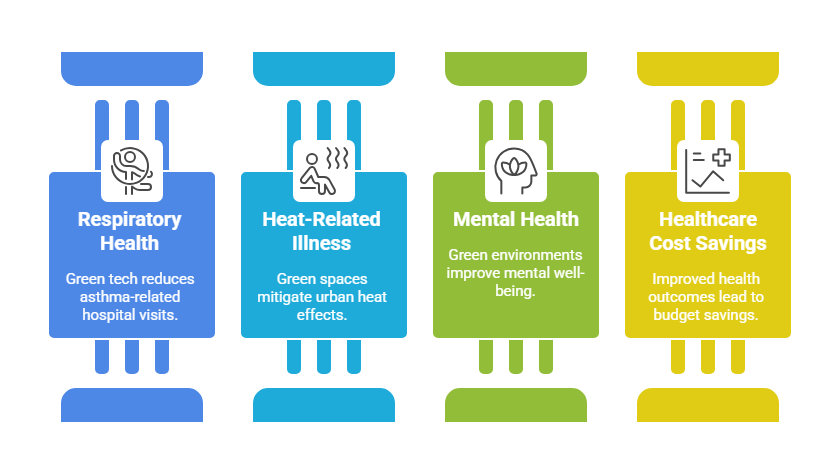
Such green tech solutions are yielding measurable gains in respiratory health, reductions in heat-related illness, and even mental health outcomes for cities implementing them, as green spaces expand and air quality improves. This naturally converts into healthcare cost savings, a more powerful municipal budget argument.
A study of three cities that aggressively adopted green tech found a 15% reduction in asthma-related hospital visits within two years.
The Tourism Advantage
Cleaner cities tend to attract more visitors and assume premium positioning within an increasingly ecologically conscious travel market.
Both Copenhagen and Amsterdam have managed to convert their green credentials into powerful tourism brands; visitors will happily pay more for the experience of sustainable urban environments. And that, of course, creates a virtuous cycle, with tourism revenue funding additional green infrastructure.
Green technology isn’t only cleaning up urban centers, it’s making them more economically competitive.
Changes Accelerated by Cultural Shifts
Green tech adoption isn’t purely top-down anymore.
Community-led initiatives are deploying startup solutions at the neighborhood level, from shared solar installations to local food waste processing. This grassroots momentum creates political pressure for city-wide adoption while proving concepts at small scale.
Social media amplifies success stories, converts early adopters into influencers, and makes sustainability culturally aspirational rather than sacrificial.
What’s Next: The 2026 Horizon
Today’s green tech startups are only the tip of the iceberg.
Technologies in development promise even more dramatic impacts: carbon-negative concrete that absorbs more CO2 than it emits, algae-based air purification systems built into building exteriors, and AI city management platforms that optimize resource use across entire urban systems in real time.
The various startups that are succeeding in 2026 combine technological sophistication with practical deployment strategies. They understand that the best solution means nothing if it can’t be installed, maintained, and scaled economically.
Making Your Story Part of the Movement
Whether you are starting a green tech startup, applying innovative sustainability in your city, or investing in urban climate technologies, your story deserves strategic amplification.
The companies making the most impact aren’t simply building better technology but rather building better stories around that technology. They understand that visibility drives adoption, investment, and ultimately impact.
Ready to position your innovation at the forefront of the urban sustainability revolution? Press N’ Release Agency creates compelling storytelling for green tech companies and sustainability initiatives that rise above the din. Our strategic content and press release packages will ensure that your solutions reach the decision-makers, investors, and communities that matter most.
Check out our customized packages at Press N’ Release Agency and learn how strategic storytelling can fast-track your influence. The cities of tomorrow are being built today—make sure your voice is part of the conversation.