Tariff rebate-most people just hear the words and think political headline, not personal benefit.
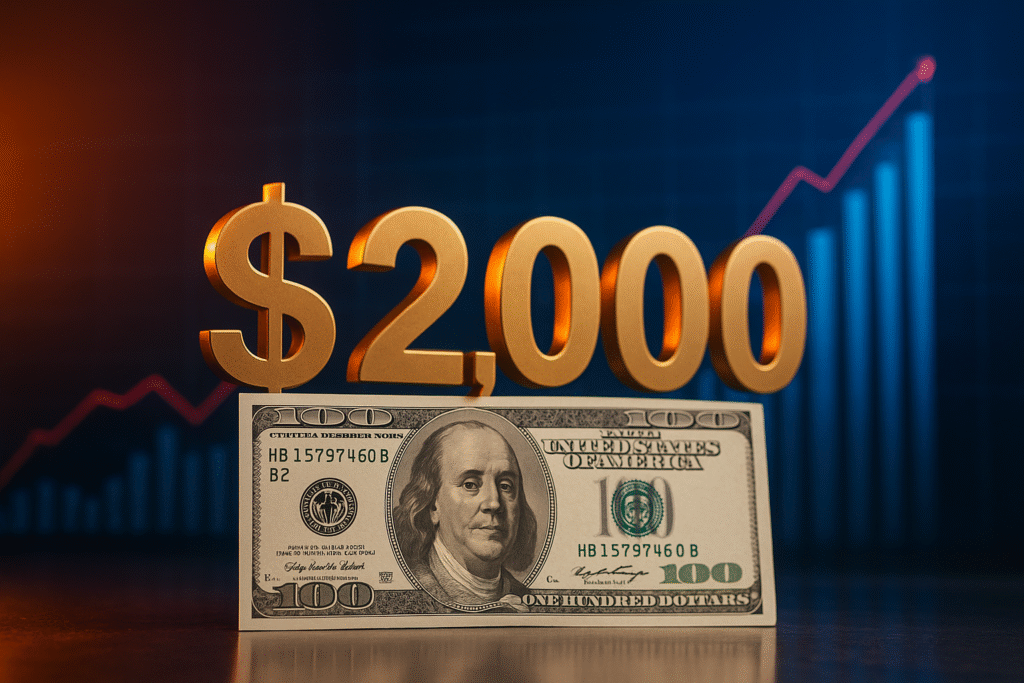
But the economic idea behind a possible $2000 tariff rebate is intimately related to one bold concept: citizen dividend theory. And its impact on your wallet could be more significant than you realize.
Want polished, research-backed blog content that keeps readers hooked? ➜ Tap here to hire professional writers and get started today.
How a Tariff Rebate Connects to Citizen Dividend Theory
A tariff rebate may sound like a simple refund of overpaid taxes.
But economists see something deeper.
According to the citizen dividend theory, when a government derives revenues from shared national resources—such as import tariffs—a portion of those revenues may be returned directly to its citizens.
This transforms tariffs from a ‘behind-the-scenes’ government tool to a direct, quantifiable benefit to the individual.
Under this concept, a $2,000 rebate isn’t just a stimulus check.
It’s your share of national economic activity.
Tariffs Generate Revenue. Citizen Dividend Theory Redirects It.
Here is the logic in plain English:
- Tariffs generate billions every year.
- That money usually goes directly into federal budgets.
- But the citizen dividend theory argues that the rightful recipients of surplus revenue are citizens, not institutions.
- This is because a rebate simply returns a slice of the money already collected.
Instead of allowing tariff revenue to disappear into general government spending, a citizen dividend reframes the money as a public asset, harvested and redistributed back to the people who are bearing the cost.
It’s simple.
It’s elegant.
And for many Americans, it could be meaningful.
The Hidden Economic Impact of a Tariff Rebate
The possible tariff rebates’ economic impact is far-reaching, going beyond a one-time payment in itself.
Even a modest rebate—say $2,000—can have far-reaching effects across multiple layers of the economy.
Increased Local Spending
Most recipients will indeed spend the rebate quickly.
That means:
- More restaurant visits
- More retail purchases
- More service bookings
- More payments on existing debts
The rapid injection of cash directly stimulates the local economies.
Short-Term Boost in Consumer Confidence
Rebates frequently create a psychological response:
People feel that they are more financially secure, even when this may be only temporary.
Higher confidence is indeed associated with greater spending and investment.
Potential Long-Term Economic Stabilization of the Economy
Injecting cash directly into homes—rather than into companies—creates a broad base of micro-stabilizers.
People pay rent.
They pay utilities.
They catch up on bills.
Household remodeling and repairs happen.
All of this supports foundational pillars of the economy that ripple upward.

Does a Tariff Rebate Increase Inflation?
Surprisingly, not necessarily.
Most of the revenue from tariffs is already taken out of consumer prices. A rebate simply reverses a part of that flow.
Unlike a generalized stimulus, a tariff rebate comes from existing funds, not new money creation.
Economists argue that this makes it a neutral-to-positive adjustment rather than an inflation accelerator.
Why Economists Are Paying Attention
Because such logic might just change the way people think about national revenue.
One of the few fiscal mechanisms that provides for a tariff rebate:
- It collects from foreign imports.
- It redistributes to domestic households.
- Conforms with the Citizen Dividend Theory principles
- It improves household liquidity.
- Strengthens the consumer economy
In other words:
It is a peculiar combination of trade policy and household economics.
This Is Not New — It’s Just Newly Relevant
Various versions of the citizen dividend theory have been discussed for decades:
- Alaska’s oil revenue dividend
- Carbon dividend proposals
- Universal basic income models
- Resource-based sovereign wealth funds
A tariff rebate simply modernizes the concept for a global trade environment.
If widely adopted, it could redefine the relationship between consumers, national revenue, and economic fairness.
What a $2,000 Rebate Could Mean for the Average Household
A lump sum of that size isn’t trivial for most people.
Households overwhelmingly use rebate-style payments to catch up or get ahead.
Other common uses:
- Paying down credit card balances
- Reduce monthly bills
- Making necessary home repairs
- Investment in personal or professional development
- Building emergency savings
This is compounded rapidly when millions of people do it simultaneously.
This reveals the stronger economic effect of a tariff rebate: not simply about placing money in pockets, but rather increasing national financial resiliency.
Why Business Owners Should Pay Even Closer Attention
When consumers suddenly have stronger purchasing power, that is felt first by local businesses.
A rebate can result in:
- Increased inquiries
- Higher conversion rates
- More discretionary spending
- Improved customer retention
In short, it amplifies the ecosystem businesses already depend on.
This is a prime moment for brands to be visible.
Especially online.
Consumers Will Be Searching More — And Brands Must Respond
Whenever financial incentives or government payments hit the news cycle, the search volume spikes.
People look for:
- Services
- Products
- Investments
- How to maximize one’s funds
- Reliable businesses to spend with
If your business isn’t positioned as that trusted expert in your niche, you miss the wave.
This is why press releases, brand authority, and expert positioning matter right now more than ever.
How to Leverage This Economic Moment and Position Your Business as an Authority
If a tariff rebate becomes reality—or even a discussion point—businesses that publish strategic content will stand out.
Press releases can help you:
- Get featured on high-authority news sites
- Build instant credibility
- Capture search traffic while the topic is trending
- Establish brand authority
- Drive local and national customers to your site
This is a moment of opportunity.
Your message should be front and center when consumers start searching.
Conclusion: A Tariff Rebate Is More Than a Check
The potential $2,000 tariff rebate isn’t just a gesture from the government.
It’s a powerful, real example of citizen dividend theory, showing how national revenue could directly flow back to the people who fund the economy every day.
Its economic effect could be significant, not only in households but also in local businesses positioned to tap these newly empowered consumers.
And that’s where your next step becomes crucial.
Want to be more visible and build authority?
If you want to capitalize on the rising consumer attention, the trending economic discussions, and long-term brand positioning, then Press N’ Release Agency can help you turn your message into national exposure.
Discover press release packages, brand-visibility tools, and expert positioning solutions at: www.pressnreleaseagency.com
Take the next step in getting your business seen where your audience is already looking.